Avocado breaks every rule in the fruit playbook. Where most fruits are low-fat sugar vehicles, avocado packs 14.7 g of fat per 100 g — mostly heart-friendly oleic acid, the same monounsaturated fat that gives olive oil its health halo. At 160 kcal per 100 g, it is the most calorie-dense common fruit, yet its 8.5 g of carbohydrates include a remarkable 6.7 g of fiber and just 0.7 g of sugar, giving it one of the lowest net-carb counts in the produce section. With 2 g of protein, 73.2 g of water, and a creamy texture that replaces butter, mayo, and cream cheese in dozens of recipes, avocado earns its place in every serious meal plan.
Potassium leads at 485 mg per 100 g — more than a banana — supporting blood pressure regulation and muscle contraction. Folate (81 mcg, about 20 % DV) drives cell division and is critical for prenatal health. Vitamin K (21 mcg) aids calcium metabolism and blood clotting, while vitamin E (2.07 mg) acts as a fat-soluble antioxidant protecting cell membranes from oxidative damage. Vitamin C (10 mg) and vitamin B6 (0.257 mg) support immune function and neurotransmitter synthesis respectively. Pantothenic acid (1.39 mg, about 28 % DV) is essential for energy metabolism and synthesizing coenzyme A. Copper (0.19 mg) and magnesium (29 mg) round out the profile, supporting connective tissue formation and over 300 enzymatic reactions in the body.
Press gently near the stem — a ripe avocado yields to moderate pressure without feeling mushy. To speed ripening, seal it in a paper bag with a banana; the ethylene gas does the work in one to two days. Once cut, press plastic wrap directly against the exposed flesh and refrigerate — the airtight contact, not lemon juice, is what truly prevents browning. Mash onto toast and top with everything seasoning and a poached egg for a 300 kcal breakfast that holds you until lunch. Blend half an avocado into smoothies for silky body without dairy, or cube it into grain bowls where the fat helps absorb fat-soluble vitamins from leafy greens. Avoid heating avocado above 130 °C — it turns bitter due to tannin activation.
| Nutrient | Per 100 g | Per serving |
|---|---|---|
| Calories | 160 kcal | 109 kcal |
| Protein | 2 g | 1.4 g |
| Fat | 14.7 g | 10.0 g |
| Carbohydrates | 8.5 g | 5.8 g |
| Fiber | 6.7 g | 4.6 g |
| Sugar | 0.7 g | 0.5 g |
| Water | 73.2 g | 49.8 g |
| Vitamins & Minerals | ||
| Vitamin C | 10 mg | 11% |
| Vitamin B6 | 0.257 mg | 15% |
| Vitamin E | 2.07 mg | 14% |
| Vitamin K | 21 µg | 18% |
| Folate | 81 µg | 20% |
| Potassium | 485 mg | 10% |
| Magnesium | 29 mg | 7% |
| Copper | 0.19 mg | 21% |
| Pantothenic Acid (B5) | 1.39 mg | 28% |
| Serving | Calories | Protein | Fat | Carbohydrates |
|---|---|---|---|---|
| 100 g | 160 kcal | 2 g | 14.7 g | 8.5 g |
| Half (68 g) | 109 kcal | 1.4 g | 10.0 g | 5.8 g |
| Whole (136 g) | 218 kcal | 2.7 g | 20.0 g | 11.6 g |
| 1 cup sliced (146 g) | 234 kcal | 2.9 g | 21.5 g | 12.4 g |
| Food | Calories | Protein | Fat | Carbohydrates |
|---|---|---|---|---|
| Avocado | 160 kcal | 2 g | 14.7 g | 8.5 g |
| Lemon | 29 kcal | 1.1 g | 0.3 g | 9.3 g |
| Watermelon | 30 kcal | 0.6 g | 0.2 g | 7.6 g |
| Strawberry | 32 kcal | 0.7 g | 0.3 g | 7.7 g |
| Peach | 39 kcal | 0.9 g | 0.3 g | 9.5 g |
Use our calorie calculator to find your daily calorie needs.
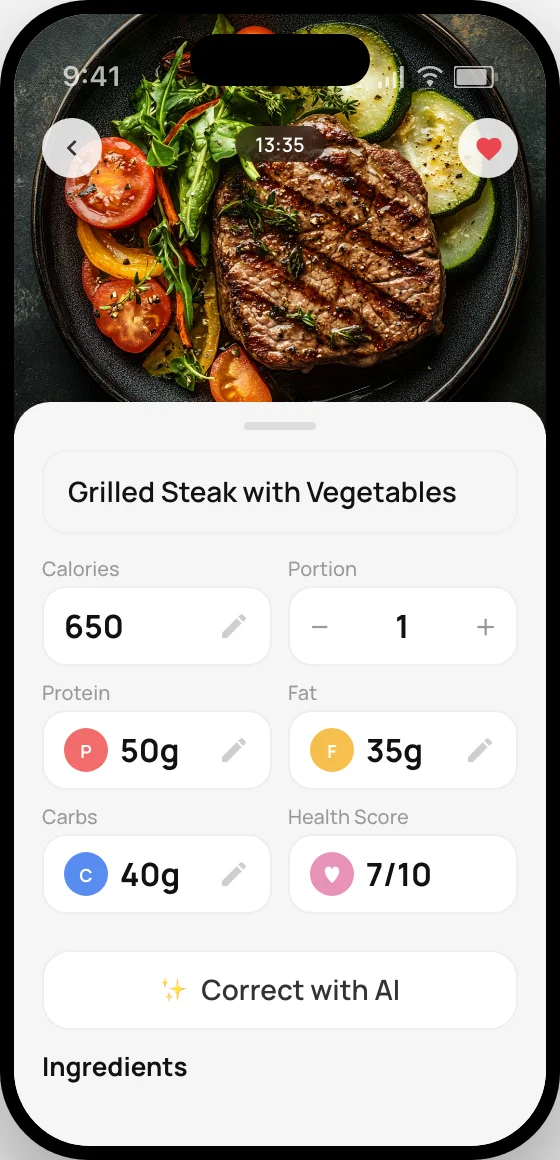
Snap a photo of your meal — CalZen AI instantly calculates calories, protein, carbs, and fat. No manual entry needed.