Known as the king of fruits across South Asia, mango delivers tropical sweetness backed by serious nutrition. At 60 kcal per 100 g, it contains 15 g of carbohydrates with 13.7 g of sugar — among the sweetest fruits by weight — yet 1.6 g of fiber and 83.5 g of water keep the glycemic impact moderate. With 0.8 g of protein and just 0.4 g of fat, mango is essentially a flavored hydration bomb that tastes like dessert but delivers the nutrient profile of a multivitamin.
Vitamin C stands at 36.4 mg per 100 g (roughly 40 % DV), bolstering immune defense and collagen synthesis. Vitamin A, present as 54 mcg RAE of beta-carotene, makes mango one of the richest fruit sources of this vision-protecting nutrient — a single cup of sliced mango covers over 20 % of your daily requirement. Folate (43 mcg) supports DNA repair and red blood cell formation, making mango particularly valuable during pregnancy. Vitamin B6 (0.119 mg) aids neurotransmitter production, while vitamin E (0.9 mg) provides lipid-soluble antioxidant protection. Potassium (168 mg) helps regulate fluid balance, and copper (0.111 mg) supports iron metabolism. Mangoes also contain mangiferin, a unique polyphenol studied for its anti-inflammatory and blood-sugar-stabilizing properties.
Pick a mango by smell, not color — a ripe mango smells sweet and fragrant at the stem end regardless of whether it is red, yellow, or green. To cube without a mess, slice both cheeks off the flat pit, score the flesh in a crosshatch pattern, and invert the skin to push out perfect cubes. Frozen mango chunks blend into the creamiest smoothies and are often cheaper and more consistent than fresh. Pair mango with lime juice and chili powder for a street-style snack, or dice it into salsa with red onion, cilantro, and jalapeño. Store uncut ripe mangoes in the fridge for up to five days; once cut, consume within two days. Avoid cooking mango at high heat for long periods — it breaks down into mush. A quick 30-second sear in a hot pan, though, caramelizes the sugars beautifully.
| Nutrient | Per 100 g | Per serving |
|---|---|---|
| Calories | 60 kcal | 124 kcal |
| Protein | 0.8 g | 1.7 g |
| Fat | 0.4 g | 0.8 g |
| Carbohydrates | 15 g | 31.0 g |
| Fiber | 1.6 g | 3.3 g |
| Sugar | 13.7 g | 28.4 g |
| Water | 83.5 g | 172.8 g |
| Vitamins & Minerals | ||
| Vitamin C | 36.4 mg | 40% |
| Vitamin A | 0.054 mg | 6% |
| Vitamin B6 | 0.119 mg | 7% |
| Vitamin E | 0.9 mg | 6% |
| Folate | 43 µg | 11% |
| Potassium | 168 mg | 4% |
| Copper | 0.111 mg | 12% |
| Serving | Calories | Protein | Fat | Carbohydrates |
|---|---|---|---|---|
| 100 g | 60 kcal | 0.8 g | 0.4 g | 15 g |
| Whole (207 g) | 124 kcal | 1.7 g | 0.8 g | 31.0 g |
| 1 cup sliced (165 g) | 99 kcal | 1.3 g | 0.7 g | 24.8 g |
| Food | Calories | Protein | Fat | Carbohydrates |
|---|---|---|---|---|
| Mango | 60 kcal | 0.8 g | 0.4 g | 15 g |
| Lemon | 29 kcal | 1.1 g | 0.3 g | 9.3 g |
| Watermelon | 30 kcal | 0.6 g | 0.2 g | 7.6 g |
| Strawberry | 32 kcal | 0.7 g | 0.3 g | 7.7 g |
| Peach | 39 kcal | 0.9 g | 0.3 g | 9.5 g |
Use our calorie calculator to find your daily calorie needs.
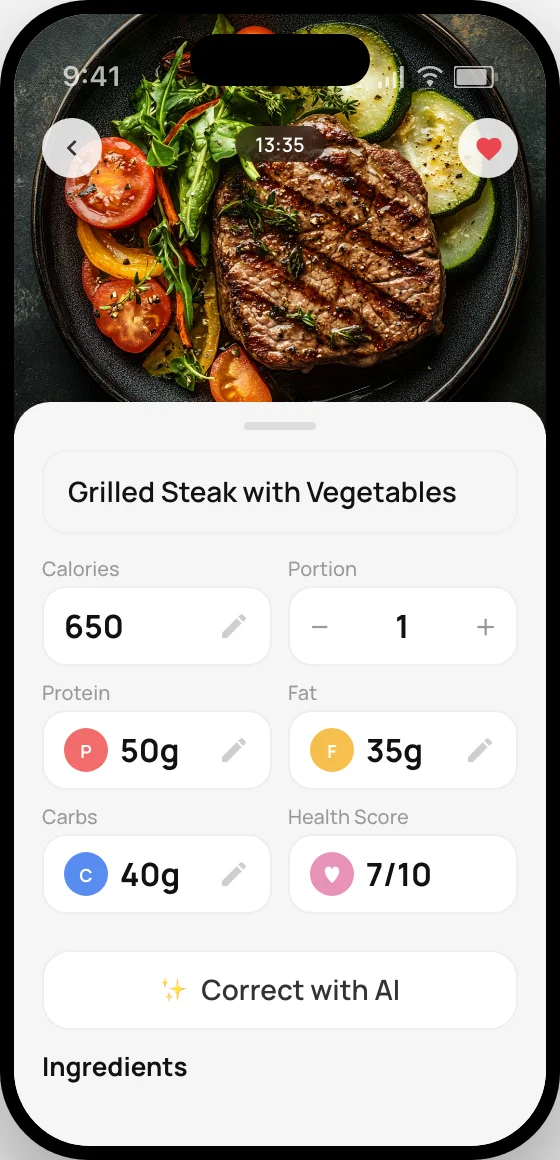
Snap a photo of your meal — CalZen AI instantly calculates calories, protein, carbs, and fat. No manual entry needed.