The egg is nature's most complete single-ingredient food — delivering high-quality protein, essential fats, and nearly every vitamin and mineral the body needs in a self-contained 70-calorie package. At 155 kcal per 100 g (about two large eggs), it provides 12.6 g of protein with a biological value of 100 — the reference standard against which all other protein sources are measured. The 11.3 g of fat includes both saturated and unsaturated fatty acids, while 1.1 g of carbohydrates and zero fiber make eggs a near-perfect fit for low-carb and ketogenic diets. With 75.8 g of water, they are more hydrating than their solid appearance suggests.
Selenium leads at 30.7 mcg per 100 g (about 56 % DV), supporting thyroid function and antioxidant defense. Vitamin B12 (0.89 mcg, roughly 37 % DV) is critical for nerve health and red blood cell formation — eggs are one of the few non-meat sources. Riboflavin (0.457 mg, about 35 % DV) drives energy metabolism. Phosphorus (198 mg) and calcium (56 mg) support bone structure. Vitamin A (160 mcg RAE, about 18 % DV) maintains vision and immune function. Vitamin D (2 mcg, about 10 % DV) is rare in foods and essential for calcium absorption. Folate (47 mcg), vitamin B6 (0.17 mg), and pantothenic acid (1.533 mg, about 31 % DV) round out the B-vitamin complex. Iron (1.75 mg), zinc (1.29 mg), and potassium (138 mg) support oxygen transport, immune function, and blood pressure. The 372 mg of cholesterol per 100 g once sparked fear, but current research confirms dietary cholesterol has minimal impact on blood cholesterol for most people.
For perfect soft-boiled eggs, lower into boiling water for exactly 6.5 minutes, then transfer to ice water — the yolk will be jammy and the proteins fully set. Hard-boil at 12 minutes. Start with boiling water, not cold, for consistent timing. Scramble over medium-low heat, stirring constantly with a spatula, removing from heat just before they look done — residual heat finishes the job, yielding creamy curds instead of rubber. Fry in a nonstick pan at medium heat with a thin layer of butter for crispy edges and a runny yolk. Store eggs in the fridge (not the door, where temperature fluctuates) for up to five weeks. Check freshness by placing in water: fresh eggs sink and lie flat, older ones tilt upward, and floaters should be discarded.
| Nutrient | Per 100 g | Per serving |
|---|---|---|
| Calories | 155 kcal | 78 kcal |
| Protein | 12.6 g | 6.3 g |
| Fat | 11.3 g | 5.7 g |
| Carbohydrates | 1.1 g | 0.6 g |
| Fiber | 0 g | 0.0 g |
| Sugar | 1.1 g | 0.6 g |
| Water | 75.8 g | 37.9 g |
| Vitamins & Minerals | ||
| Calcium | 56 mg | 4% |
| Phosphorus | 198 mg | 16% |
| Potassium | 138 mg | 3% |
| Sodium | 142 mg | 6% |
| Zinc | 1.29 mg | 12% |
| Iron | 1.75 mg | 10% |
| Selenium | 30.7 µg | 56% |
| Vitamin A | 0.16 mg | 18% |
| Vitamin D | 2 µg | 10% |
| Vitamin B12 | 0.89 µg | 37% |
| Riboflavin (B2) | 0.457 mg | 35% |
| Folate | 47 µg | 12% |
| Vitamin B6 | 0.17 mg | 10% |
| Pantothenic Acid (B5) | 1.533 mg | 31% |
| Cholesterol | 372 mg | 124% |
| Serving | Calories | Protein | Fat | Carbohydrates |
|---|---|---|---|---|
| 100 g | 155 kcal | 12.6 g | 11.3 g | 1.1 g |
| Large (50 g) | 78 kcal | 6.3 g | 5.7 g | 0.6 g |
| Medium (44 g) | 68 kcal | 5.5 g | 5.0 g | 0.5 g |
| extra_large (56 g) | 87 kcal | 7.1 g | 6.3 g | 0.6 g |
| Food | Calories | Protein | Fat | Carbohydrates |
|---|---|---|---|---|
| Egg | 155 kcal | 12.6 g | 11.3 g | 1.1 g |
| Tofu | 76 kcal | 8.1 g | 4.8 g | 1.9 g |
| Lentils (cooked) | 116 kcal | 9 g | 0.4 g | 20.1 g |
| Black Beans (cooked) | 132 kcal | 8.9 g | 0.5 g | 23.7 g |
| Chickpeas (cooked) | 164 kcal | 8.9 g | 2.6 g | 27.4 g |
Use our calorie calculator to find your daily calorie needs.
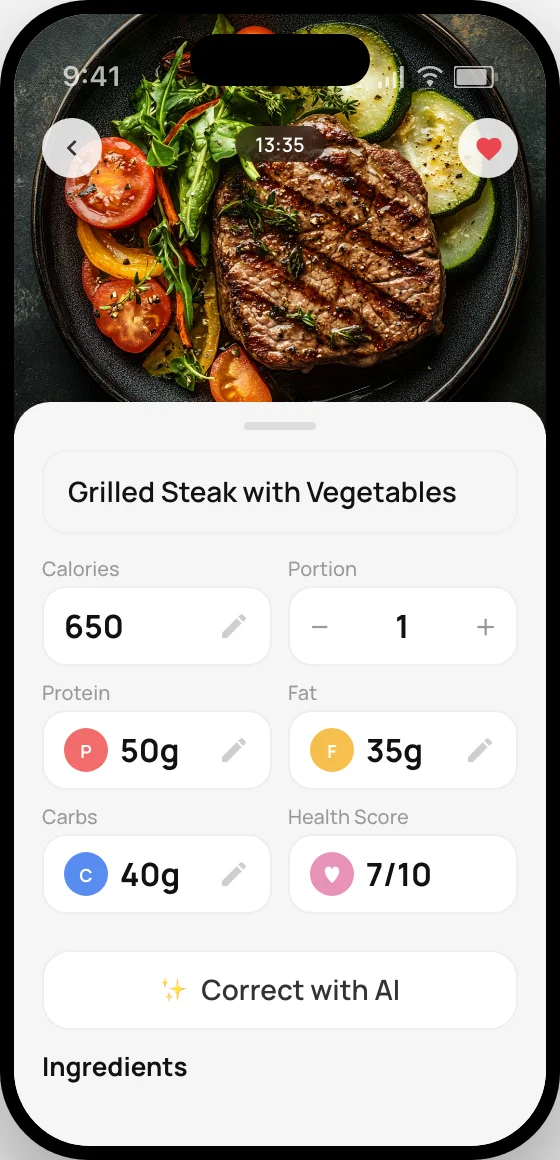
Snap a photo of your meal — CalZen AI instantly calculates calories, protein, carbs, and fat. No manual entry needed.