Herring is a small, silvery fish that has quietly sustained Northern European populations for a millennium — from pickled matjes in the Netherlands to Swedish surströmming to German Bismarck herring. At 158 kcal per 100 g with 18 g of protein and 9 g of fat, it delivers a potent dose of omega-3 fatty acids at a fraction of the cost of salmon. Herring schools once numbered in the billions and were so central to medieval trade that entire cities — like Amsterdam — built their wealth on the herring catch.
Vitamin B12 is the standout at an extraordinary 13.67 mcg per 100 g — 569% of the Daily Value — making herring the single richest common food source of this critical vitamin. B12 is essential for myelin sheath maintenance (protecting nerve fibers), DNA replication, and red blood cell maturation; deficiency causes irreversible neurological damage if left untreated. Selenium (36.5 mcg, 66% DV) powers the glutathione antioxidant defense system and supports thyroid hormone activation. Vitamin D (4.2 mcg, 28% DV) aids calcium absorption and immune regulation. Phosphorus (236 mg) and potassium (327 mg) maintain bone density and cardiovascular rhythm, while magnesium (32 mg) supports hundreds of enzymatic reactions. Niacin (3.22 mg) drives energy metabolism, and vitamin B6 (0.3 mg) assists in hemoglobin formation. Iron (1.1 mg) in heme form supports oxygen delivery, and zinc (0.99 mg) aids immune function. Riboflavin (0.23 mg), thiamin (0.09 mg), and pantothenic acid (0.65 mg) round out a comprehensive B-vitamin suite. Cholesterol is 60 mg — low for a fish this nutrient-dense.
Fresh herring is best prepared simply to let its natural richness shine. Gut and butterfly the fish, brush with oil, season with salt and pepper, and grill for 2-3 minutes per side over high heat until the skin chars and blisters. The high fat content makes herring virtually impossible to dry out on the grill, which is a rare advantage among small fish. For pan-frying, dust lightly in seasoned flour or oatmeal (a Scottish tradition) and cook in butter for 3 minutes per side. Pickled herring is the gateway to this fish for many people: cure fillets in a mixture of white vinegar, sugar, onion rings, and allspice for at least 48 hours. Serve on dark rye bread with sour cream, red onion, and fresh dill for a Scandinavian open-faced sandwich that delivers over 18 g of protein. Smoked herring (kippers) are traditionally eaten for breakfast in Britain, grilled with butter and served alongside toast. Because herring is a small, short-lived species, it accumulates minimal mercury, making it one of the safest fish for regular consumption. Buy fresh herring with bright, clear eyes and firm flesh, and use within a day.
| Nutrient | Per 100 g | Per serving |
|---|---|---|
| Calories | 158 kcal | 226 kcal |
| Protein | 18 g | 25.7 g |
| Fat | 9 g | 12.9 g |
| Carbohydrates | 0 g | 0.0 g |
| Fiber | 0 g | 0.0 g |
| Sugar | 0 g | 0.0 g |
| Water | 72.1 g | 103.1 g |
| Vitamins & Minerals | ||
| Vitamin B12 | 13.67 µg | 570% |
| Vitamin D | 4.2 µg | 21% |
| Niacin (B3) | 3.22 mg | 20% |
| Vitamin B6 | 0.3 mg | 18% |
| Riboflavin (B2) | 0.23 mg | 18% |
| Thiamin (B1) | 0.09 mg | 8% |
| Pantothenic Acid (B5) | 0.65 mg | 13% |
| Selenium | 36.5 µg | 66% |
| Phosphorus | 236 mg | 19% |
| Potassium | 327 mg | 7% |
| Magnesium | 32 mg | 8% |
| Iron | 1.1 mg | 6% |
| Zinc | 0.99 mg | 9% |
| Cholesterol | 60 mg | 20% |
| Serving | Calories | Protein | Fat | Carbohydrates |
|---|---|---|---|---|
| 100 g | 158 kcal | 18 g | 9 g | 0 g |
| 1 fillet (143 g) | 226 kcal | 25.7 g | 12.9 g | 0.0 g |
| 1 piece (40 g) | 63 kcal | 7.2 g | 3.6 g | 0.0 g |
| Food | Calories | Protein | Fat | Carbohydrates |
|---|---|---|---|---|
| Herring | 158 kcal | 18 g | 9 g | 0 g |
| Cod | 82 kcal | 17.8 g | 0.7 g | 0 g |
| Shrimp | 99 kcal | 24 g | 0.3 g | 0.2 g |
| Tuna | 132 kcal | 28.2 g | 1.3 g | 0 g |
| Trout | 190 kcal | 20.5 g | 11.5 g | 0 g |
Use our calorie calculator to find your daily calorie needs.
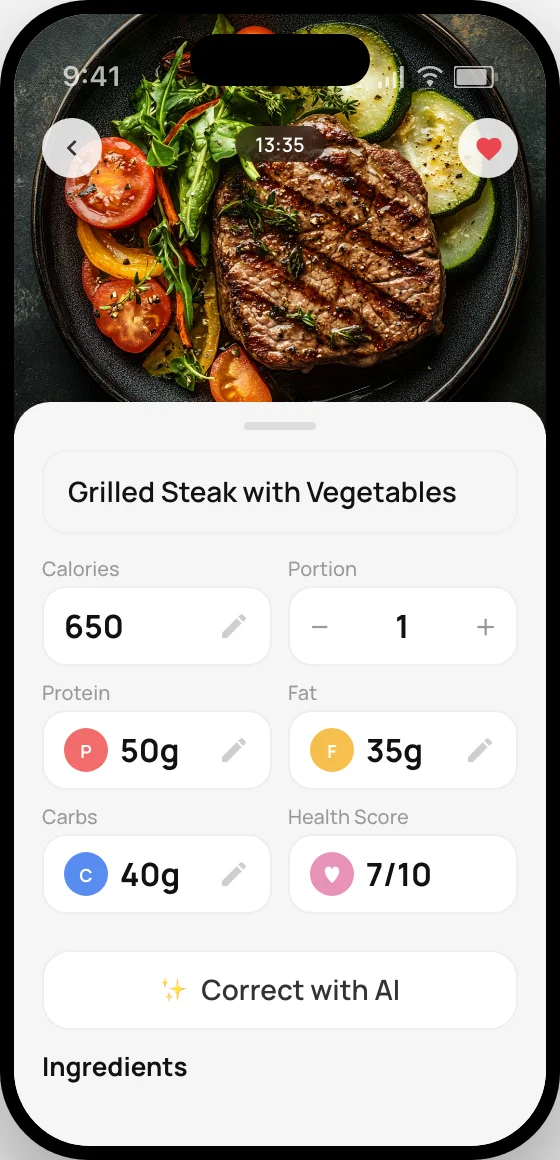
Snap a photo of your meal — CalZen AI instantly calculates calories, protein, carbs, and fat. No manual entry needed.