Kiwi is a nutritional overachiever disguised as a small, fuzzy fruit. At 61 kcal per 100 g, it packs 14.7 g of carbohydrates with 9 g of sugar, 3 g of fiber, and 1.1 g of protein — an unusually balanced macronutrient profile for fruit. With 83.1 g of water and just 0.5 g of fat, kiwi is lean and hydrating. But the numbers that truly set it apart are in the micronutrients, where this small fruit punches far above its weight class, delivering more vitamin C than oranges and more vitamin K than most leafy greens per calorie.
Vitamin C is extraordinary at 92.7 mg per 100 g — over 100 % of the daily value in a single fruit, outperforming oranges by 75 %. This fuels collagen synthesis, immune cell proliferation, and iron absorption from plant sources. Vitamin K (40.3 mcg, about 34 % DV) is unusually high for a fruit, supporting bone mineralization and proper blood clotting. Vitamin E (1.46 mg) provides fat-soluble antioxidant protection for cell membranes. Potassium (312 mg) — close to banana levels — helps regulate blood pressure and nerve signaling. Folate (25 mcg) supports DNA synthesis, and copper (0.13 mg) aids iron metabolism. Kiwi also contains actinidin, a natural enzyme similar to bromelain that aids protein digestion — marinating meat in kiwi juice for 15 minutes noticeably tenderizes it.
The skin is edible and doubles the fiber intake — wash well and eat the whole fruit for maximum nutrition. Gold kiwis have smoother, thinner skin that is easier to eat than the fuzzy green variety. To ripen quickly, place kiwi in a bag with a banana for one to two days. Cut in half and scoop with a spoon for the easiest serving method, or slice into rounds for yogurt bowls and pavlova. Do not combine raw kiwi with dairy-based desserts more than 20 minutes before serving — actinidin breaks down casein and creates a bitter flavor. Frozen kiwi slices make excellent smoothie additions, and the enzyme does not survive freezing, so the dairy issue disappears. Pair with strawberry and banana for a tropical fruit salad that covers over 200 % of your daily vitamin C.
| Nutrient | Per 100 g | Per serving |
|---|---|---|
| Calories | 61 kcal | 42 kcal |
| Protein | 1.1 g | 0.8 g |
| Fat | 0.5 g | 0.3 g |
| Carbohydrates | 14.7 g | 10.1 g |
| Fiber | 3 g | 2.1 g |
| Sugar | 9 g | 6.2 g |
| Water | 83.1 g | 57.3 g |
| Vitamins & Minerals | ||
| Vitamin C | 92.7 mg | 103% |
| Vitamin K | 40.3 µg | 34% |
| Vitamin E | 1.46 mg | 10% |
| Potassium | 312 mg | 7% |
| Folate | 25 µg | 6% |
| Copper | 0.13 mg | 14% |
| Serving | Calories | Protein | Fat | Carbohydrates |
|---|---|---|---|---|
| 100 g | 61 kcal | 1.1 g | 0.5 g | 14.7 g |
| Medium (69 g) | 42 kcal | 0.8 g | 0.3 g | 10.1 g |
| Large (91 g) | 56 kcal | 1.0 g | 0.5 g | 13.4 g |
| Food | Calories | Protein | Fat | Carbohydrates |
|---|---|---|---|---|
| Kiwi | 61 kcal | 1.1 g | 0.5 g | 14.7 g |
| Lemon | 29 kcal | 1.1 g | 0.3 g | 9.3 g |
| Watermelon | 30 kcal | 0.6 g | 0.2 g | 7.6 g |
| Strawberry | 32 kcal | 0.7 g | 0.3 g | 7.7 g |
| Peach | 39 kcal | 0.9 g | 0.3 g | 9.5 g |
Use our calorie calculator to find your daily calorie needs.
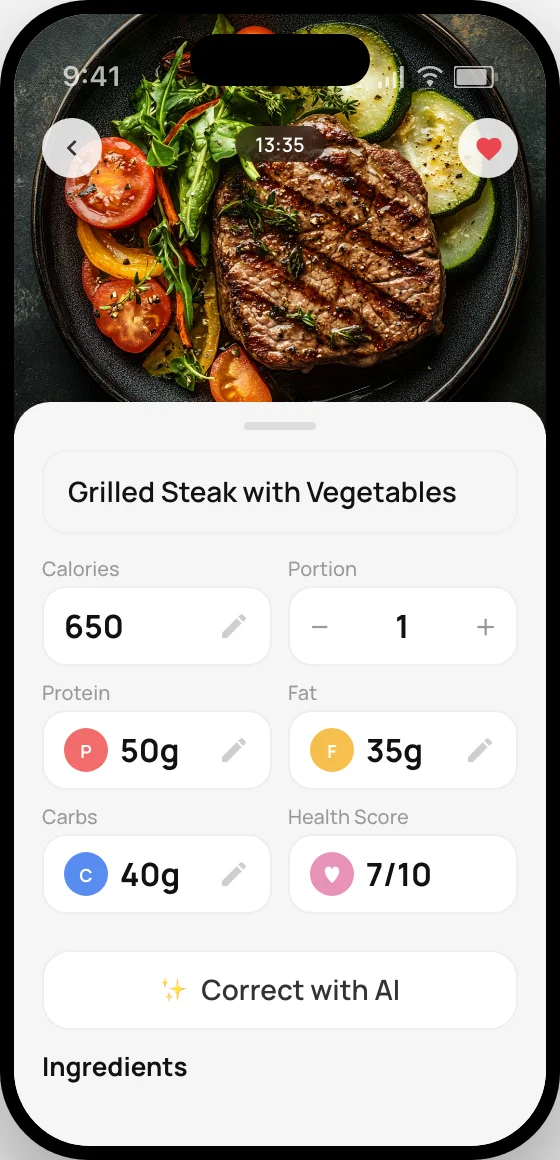
Snap a photo of your meal — CalZen AI instantly calculates calories, protein, carbs, and fat. No manual entry needed.