
A GLP-1 symptom log with dates and context
“I felt unwell last week” is hard to discuss in detail. A dated note can preserve what you noticed, when it began, and what you wanted to ask—without assuming you already know the cause.
The short answer
Record the observation, its actual time, how long it lasted if known, and how it affected your day. Keep medication dates as separate facts. A diary is not a diagnosis, and you should not wait to complete it before getting help.
Download the blank symptom log ↓
Five fields that make a note easier to review
- Date and time: when you noticed it, not just when you entered the note.
- Your words: what you felt rather than an assumed diagnosis.
- Duration: what you know, leaving uncertainty visible.
- Impact: what became harder to do, eat or drink.
- Question: what you want to clarify with your care team.
You can use the blank CSV below in a spreadsheet. No account or health details are required to download it.
Observation and interpretation are different
Fictional example: “Felt queasy at 9 AM; ate less breakfast than planned; want to ask what else to record.” That preserves an observation. “My dose is wrong” adds a conclusion the note cannot establish.
If you also keep medication records, retain their own actual dates and amounts. Two events appearing close together do not prove that one caused the other.
Leave missing days as missing
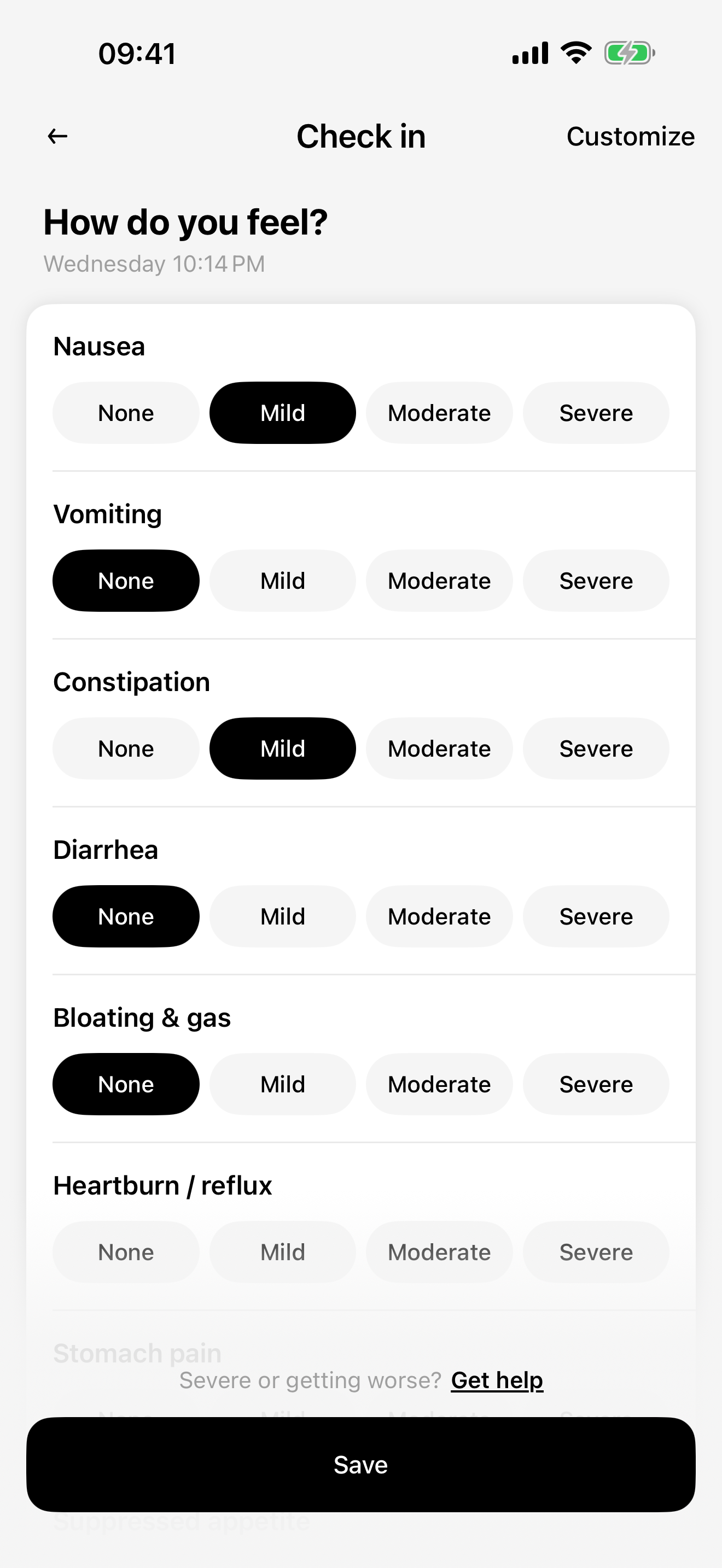
Use a consistent description when you do record how you feel. In CalZen, available check-ins include items such as appetite, nausea and fatigue. A rating describes your own report; it is not a clinical measurement.
Do not label days without entries as symptom-free. If you cannot remember a detail, do not add precision that was not in your original observation.
Do not let recordkeeping delay care
Medication safety information is product-specific; see the official information for your prescribed product, such as Zepbound or Mounjaro. A short log does not include every warning or tell you whether a symptom is safe.
Contact a qualified healthcare professional promptly if symptoms concern you or are severe or worsening. For an emergency, use local emergency services. Do not wait for a routine appointment or change your medication based on a diary score.
Use the log before an appointment
Review your dated notes and make a short question list. CalZen keeps check-ins alongside medication records, food and weight. This page does not promise an automatic clinical report or a diagnosis.
A filled log contains health information. Keep it private and decide who you want to share it with. The CSV download is a blank file; this page does not collect what you later write in it.
Questions about this record
Does this identify whether a symptom is a side effect?
No. It preserves your observations and timing. Causality and diagnosis require professional assessment.
Should I wait until I have a full week of entries?
No. Seek professional help when you need it. Completing a log is never a requirement for getting care.
Keep your records with CalZen
Medication records, wellbeing, food and weight in one app for iPhone and Android.


Available for iPhone and Android. Features and purchase options may vary by app version and region. Check the app for current access and pricing.