Onions are the invisible foundation of world cuisine — present in virtually every savory dish from every culinary tradition, yet rarely given credit for their nutritional contribution. At 40 kcal per 100 g, they contain 9.3 g of carbohydrates with 4.2 g of sugar, 1.7 g of fiber, 1.1 g of protein, and only 0.1 g of fat. With 89.1 g of water, onions are mostly liquid, which explains why they shrink so dramatically when cooked. The tears they produce when cut come from syn-propanethial-S-oxide, a sulfur compound released by enzymes when cell walls rupture — the same sulfur chemistry responsible for many of their health benefits.
Vitamin C provides 7.4 mg per 100 g (about 8 % DV), supporting immune function and antioxidant defense. Vitamin B6 (0.12 mg) aids neurotransmitter synthesis and amino acid metabolism. Folate (19 mcg) contributes to DNA synthesis and cell division. Potassium (146 mg) helps maintain blood pressure, while manganese (0.129 mg) and phosphorus (29 mg) support bone and metabolic health. Beyond standard micronutrients, onions are the richest dietary source of quercetin — a flavonoid with potent anti-inflammatory and antihistamine properties. Red onions contain roughly double the quercetin of yellow or white varieties. Onions also provide fructo-oligosaccharides (FOS), a prebiotic fiber that specifically nourishes Bifidobacteria in the gut, supporting digestive health and immune function.
Caramelize onions low and slow at medium-low heat for 35 to 45 minutes, stirring occasionally — the Maillard reaction and sugar concentration create deep, complex sweetness that transforms soups, burgers, and flatbreads. Do not rush with high heat, which browns the outside while leaving the interior raw and harsh. For the sharpest, most pungent raw onion flavor in salads, soak sliced onions in ice water for 10 minutes — this washes away the harsh sulfur compounds while preserving the crunch. Store whole onions in a cool, dry, dark place with air circulation for up to two months — never in the fridge (humidity accelerates softening) and never next to potatoes (they release gases that spoil each other). Cut onions from the root end last to minimize tears.
| Nutrient | Per 100 g | Per serving |
|---|---|---|
| Calories | 40 kcal | 44 kcal |
| Protein | 1.1 g | 1.2 g |
| Fat | 0.1 g | 0.1 g |
| Carbohydrates | 9.3 g | 10.2 g |
| Fiber | 1.7 g | 1.9 g |
| Sugar | 4.2 g | 4.6 g |
| Water | 89.1 g | 98.0 g |
| Vitamins & Minerals | ||
| Vitamin C | 7.4 mg | 8% |
| Vitamin B6 | 0.12 mg | 7% |
| Folate | 19 µg | 5% |
| Potassium | 146 mg | 3% |
| Manganese | 0.129 mg | 6% |
| Phosphorus | 29 mg | 2% |
| Serving | Calories | Protein | Fat | Carbohydrates |
|---|---|---|---|---|
| 100 g | 40 kcal | 1.1 g | 0.1 g | 9.3 g |
| Medium (110 g) | 44 kcal | 1.2 g | 0.1 g | 10.2 g |
| Large (150 g) | 60 kcal | 1.7 g | 0.2 g | 14.0 g |
| 1 cup chopped (160 g) | 64 kcal | 1.8 g | 0.2 g | 14.9 g |
| Food | Calories | Protein | Fat | Carbohydrates |
|---|---|---|---|---|
| Onion | 40 kcal | 1.1 g | 0.1 g | 9.3 g |
| Cucumber | 15 kcal | 0.7 g | 0.1 g | 3.6 g |
| Zucchini | 17 kcal | 1.2 g | 0.3 g | 3.1 g |
| Tomato | 18 kcal | 0.9 g | 0.2 g | 3.9 g |
| Spinach | 23 kcal | 2.9 g | 0.4 g | 3.6 g |
Use our calorie calculator to find your daily calorie needs.
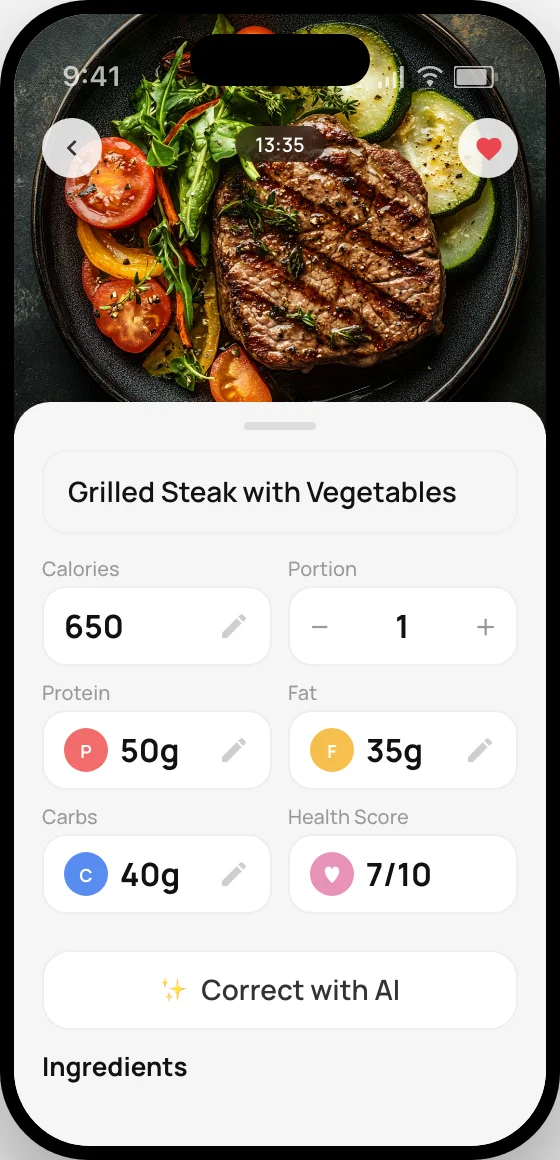
Snap a photo of your meal — CalZen AI instantly calculates calories, protein, carbs, and fat. No manual entry needed.