Spinach is the most nutrient-dense leafy green that most people actually buy and eat regularly. At only 23 kcal per 100 g, it contains 2.9 g of protein — remarkably high for a leaf — alongside 3.6 g of carbohydrates, 2.2 g of fiber, and just 0.4 g of sugar and 0.4 g of fat. With 91.4 g of water, a massive bowl of raw spinach adds almost nothing to your daily calories while contributing meaningfully to nearly every vitamin and mineral your body requires. Popeye had the right idea, even if the cartoon exaggerated the mechanism.
Vitamin K is extraordinary at 482.9 mcg per 100 g — over 400 % of the daily value, making spinach the single richest common food source of this bone- and blood-essential nutrient. Vitamin A (469 mcg RAE, about 52 % DV) supports vision, immune function, and skin health. Vitamin C (28.1 mg, roughly 31 % DV) provides antioxidant protection. Vitamin E (2.03 mg) guards cell membranes. Folate is outstanding at 194 mcg (49 % DV), critical for DNA synthesis and prenatal health. Iron (2.71 mg, about 15 % DV) supports oxygen transport, though spinach's oxalates reduce absorption — pairing with vitamin C–rich foods counteracts this. Calcium (99 mg), magnesium (79 mg), and potassium (558 mg) round out a mineral profile that few single foods can match. Riboflavin (0.189 mg) and vitamin B6 (0.195 mg) support energy metabolism, while manganese (0.897 mg) and copper (0.13 mg) activate antioxidant enzymes.
Raw spinach is perfect in salads but cooking concentrates nutrients dramatically — one cup of cooked spinach equals roughly six cups of raw leaves. Wilt spinach in a hot pan with garlic and a splash of olive oil for 60 seconds — the fat enhances absorption of vitamins A, E, and K. Squeeze out excess water after blanching to prevent soggy dishes. Add lemon juice to cooked spinach: the vitamin C boosts iron absorption by converting ferric iron to the more bioavailable ferrous form. Blend baby spinach into smoothies — the mild flavor disappears behind fruit while delivering a full serving of greens. Store in an airtight container lined with paper towels, and consume within five days. Frozen spinach is nutritionally comparable to fresh and far more practical for cooking.
| Nutrient | Per 100 g | Per serving |
|---|---|---|
| Calories | 23 kcal | 7 kcal |
| Protein | 2.9 g | 0.9 g |
| Fat | 0.4 g | 0.1 g |
| Carbohydrates | 3.6 g | 1.1 g |
| Fiber | 2.2 g | 0.7 g |
| Sugar | 0.4 g | 0.1 g |
| Water | 91.4 g | 27.4 g |
| Vitamins & Minerals | ||
| Vitamin C | 28.1 mg | 31% |
| Vitamin A | 0.469 mg | 52% |
| Vitamin K | 482.9 µg | 402% |
| Vitamin E | 2.03 mg | 14% |
| Vitamin B6 | 0.195 mg | 11% |
| Riboflavin (B2) | 0.189 mg | 15% |
| Folate | 194 µg | 49% |
| Iron | 2.71 mg | 15% |
| Calcium | 99 mg | 8% |
| Magnesium | 79 mg | 19% |
| Potassium | 558 mg | 12% |
| Manganese | 0.897 mg | 39% |
| Copper | 0.13 mg | 14% |
| Serving | Calories | Protein | Fat | Carbohydrates |
|---|---|---|---|---|
| 100 g | 23 kcal | 2.9 g | 0.4 g | 3.6 g |
| 1 cup raw (30 g) | 7 kcal | 0.9 g | 0.1 g | 1.1 g |
| 1 cup cooked (180 g) | 41 kcal | 5.2 g | 0.7 g | 6.5 g |
| Food | Calories | Protein | Fat | Carbohydrates |
|---|---|---|---|---|
| Spinach | 23 kcal | 2.9 g | 0.4 g | 3.6 g |
| Cucumber | 15 kcal | 0.7 g | 0.1 g | 3.6 g |
| Zucchini | 17 kcal | 1.2 g | 0.3 g | 3.1 g |
| Tomato | 18 kcal | 0.9 g | 0.2 g | 3.9 g |
| Cabbage | 25 kcal | 1.3 g | 0.1 g | 5.8 g |
Use our calorie calculator to find your daily calorie needs.
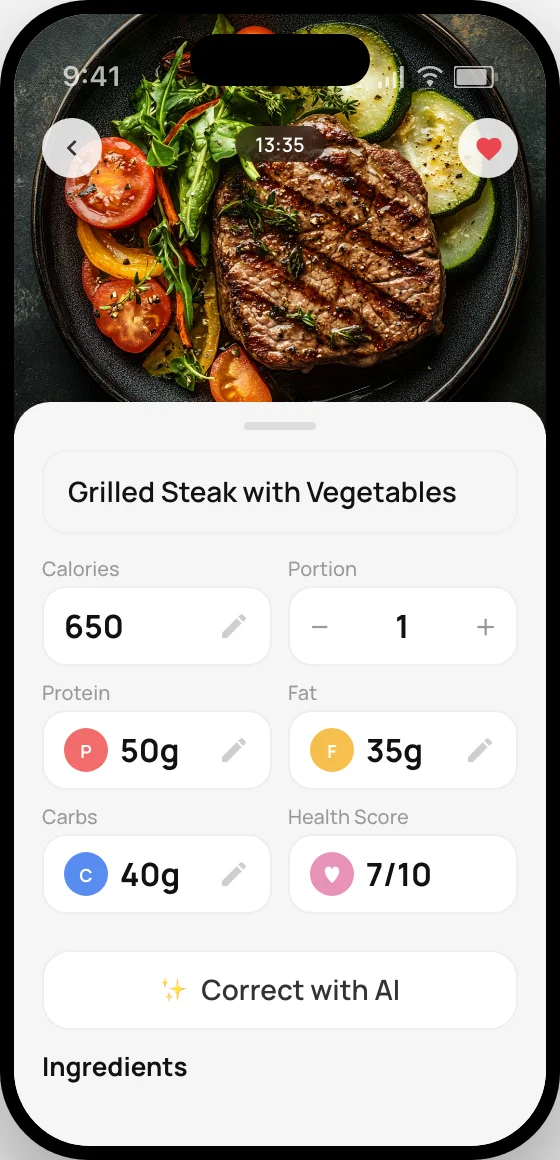
Snap a photo of your meal — CalZen AI instantly calculates calories, protein, carbs, and fat. No manual entry needed.