Carrots are the richest mainstream source of beta-carotene in the vegetable aisle — the orange pigment your body converts to vitamin A on demand. At 41 kcal per 100 g, they carry 9.6 g of carbohydrates with 4.7 g of natural sugar (more than most vegetables), 2.8 g of fiber, and 0.9 g of protein. With 88.3 g of water and just 0.2 g of fat, carrots offer a satisfying crunch with minimal caloric cost. Their sweet flavor makes them one of the few vegetables that children consistently accept, which is a nutritional win given what's packed inside that orange skin.
Vitamin A dominates at 835 mcg RAE per 100 g — a staggering 93 % of the daily value, primarily from beta-carotene. This fat-soluble provitamin is essential for night vision, immune cell maturation, and skin barrier integrity. Because beta-carotene is a provitamin, your body only converts what it needs, making toxicity virtually impossible from food sources. Vitamin C (5.9 mg) provides antioxidant support. Vitamin K (13.2 mcg) aids bone metabolism and blood clotting. Vitamin B6 (0.138 mg) supports over 100 enzymatic reactions. Potassium (320 mg) helps manage blood pressure. Manganese (0.143 mg) activates metabolic enzymes. The bioavailability of beta-carotene increases dramatically when carrots are cooked and consumed with a small amount of fat — a raw carrot delivers about 3 % of its beta-carotene, while a cooked carrot with olive oil can deliver over 30 %.
Roast carrots at 200 °C for 30 minutes with olive oil and a drizzle of honey until the edges caramelize — the heat concentrates sugars and increases beta-carotene bioavailability tenfold compared to eating them raw. Cut on a bias for more surface area and faster cooking. Raw, carrots pair perfectly with hummus for a fiber-and-protein snack, and their crunch holds up in slaws and salads. Simmer carrots into soups and puree — the natural sweetness eliminates the need for cream. Store whole, unpeeled carrots in a sealed bag in the crisper for up to three weeks; baby carrots dry out faster because they lack the protective skin. Remove the green tops before storing — they draw moisture from the root.
| Nutrient | Per 100 g | Per serving |
|---|---|---|
| Calories | 41 kcal | 25 kcal |
| Protein | 0.9 g | 0.5 g |
| Fat | 0.2 g | 0.1 g |
| Carbohydrates | 9.6 g | 5.9 g |
| Fiber | 2.8 g | 1.7 g |
| Sugar | 4.7 g | 2.9 g |
| Water | 88.3 g | 53.9 g |
| Vitamins & Minerals | ||
| Vitamin A | 0.835 mg | 93% |
| Vitamin C | 5.9 mg | 7% |
| Vitamin K | 13.2 µg | 11% |
| Vitamin B6 | 0.138 mg | 8% |
| Potassium | 320 mg | 7% |
| Manganese | 0.143 mg | 6% |
| Serving | Calories | Protein | Fat | Carbohydrates |
|---|---|---|---|---|
| 100 g | 41 kcal | 0.9 g | 0.2 g | 9.6 g |
| Medium (61 g) | 25 kcal | 0.5 g | 0.1 g | 5.9 g |
| Large (72 g) | 30 kcal | 0.6 g | 0.1 g | 6.9 g |
| 1 cup chopped (128 g) | 52 kcal | 1.2 g | 0.3 g | 12.3 g |
| Food | Calories | Protein | Fat | Carbohydrates |
|---|---|---|---|---|
| Carrot | 41 kcal | 0.9 g | 0.2 g | 9.6 g |
| Cucumber | 15 kcal | 0.7 g | 0.1 g | 3.6 g |
| Zucchini | 17 kcal | 1.2 g | 0.3 g | 3.1 g |
| Tomato | 18 kcal | 0.9 g | 0.2 g | 3.9 g |
| Spinach | 23 kcal | 2.9 g | 0.4 g | 3.6 g |
Use our calorie calculator to find your daily calorie needs.
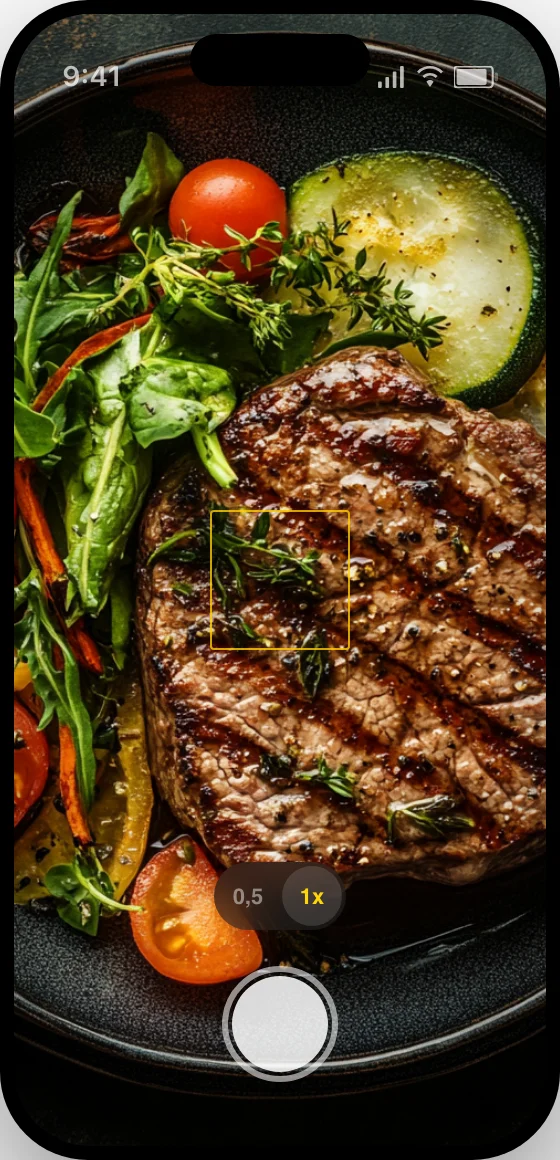
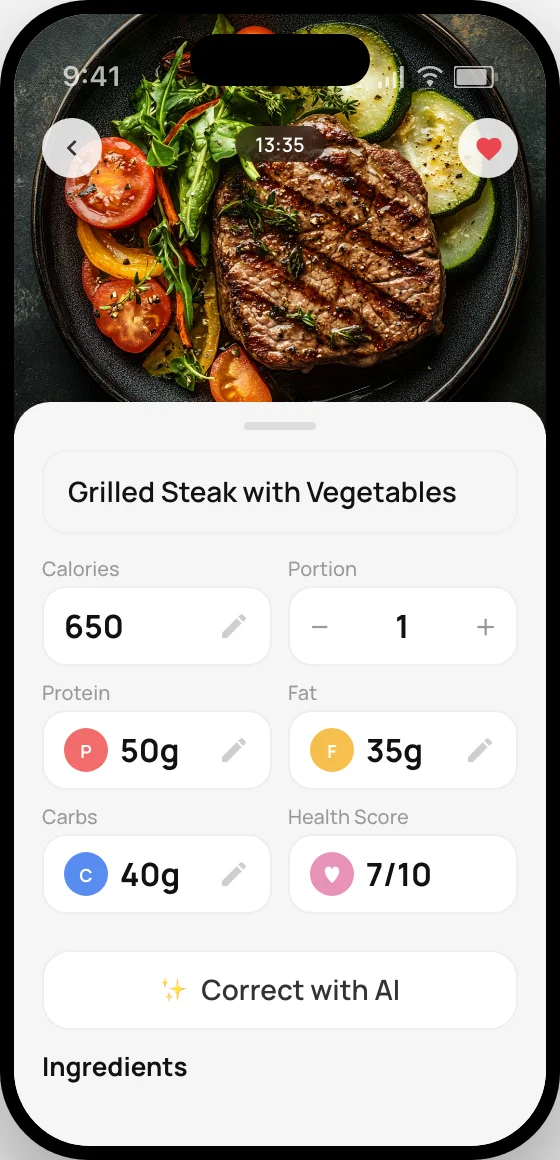
Snap a photo of your meal — CalZen AI instantly calculates calories, protein, carbs, and fat. No manual entry needed.