Corn — known as maize across most of the world — is one of the three crops that built civilization, alongside wheat and rice. Sweet corn delivers 86 kcal per 100 g with 3.3 g of protein, 18.7 g of carbohydrates (including 6.3 g of natural sugars that give it that burst of sweetness off the cob), 1.4 g of fat, and 2 g of fiber. With 75.9 g of water, fresh corn is far juicier than most people expect from a grain. It was first domesticated in southern Mexico roughly 9,000 years ago from a wild grass called teosinte — a feat of selective breeding so dramatic that the original plant is almost unrecognizable compared to today's golden ears.
Corn is one of the few grains that delivers meaningful vitamin C — 6.8 mg per 100 g (about 8% DV), providing antioxidant protection and collagen support. Potassium (270 mg) regulates fluid balance and supports cardiac rhythm. Niacin (1.77 mg, 11% DV) drives over 400 enzyme reactions in energy metabolism, though historically, populations dependent on corn without nixtamalization — the lime-water treatment developed by Mesoamerican cultures — suffered pellagra from niacin deficiency. Thiamin (0.16 mg) converts carbohydrates to energy, while pantothenic acid (0.72 mg, 14% DV) is essential for synthesizing coenzyme A. Phosphorus (89 mg) and magnesium (37 mg) support bone health and ATP production. Folate (46 mcg, 12% DV) aids DNA synthesis. B6 (0.06 mg), iron (0.52 mg), zinc (0.46 mg), and manganese (0.16 mg) contribute to immune function and antioxidant defenses. Corn's yellow pigment comes from lutein and zeaxanthin — carotenoids that protect the retina from blue light damage.
Freshness matters more with corn than almost any vegetable: sugars begin converting to starch within hours of harvest, so buy it as close to picking day as possible and cook the same day. For boiling, bring water to a rolling boil (do not add salt, which toughens the kernels), drop the shucked ears in, and cook for exactly 4-6 minutes — overcooking makes corn starchy and chewy. Grilling in the husk at 200°C (400°F) for 15-20 minutes produces smoky, caramelized kernels. For Mexican-style elote, brush grilled corn with mayo, chili powder, lime, and cotija cheese. Cut kernels store well frozen for up to 8 months — blanch for 4 minutes first, then ice-bath and freeze flat on a sheet pan before transferring to bags.
| Nutrient | Per 100 g | Per serving |
|---|---|---|
| Calories | 86 kcal | 77 kcal |
| Protein | 3.3 g | 3.0 g |
| Fat | 1.4 g | 1.3 g |
| Carbohydrates | 18.7 g | 16.8 g |
| Fiber | 2 g | 1.8 g |
| Sugar | 6.3 g | 5.7 g |
| Water | 75.9 g | 68.3 g |
| Vitamins & Minerals | ||
| Vitamin C | 6.8 mg | 8% |
| Thiamin (B1) | 0.16 mg | 13% |
| Niacin (B3) | 1.77 mg | 11% |
| Vitamin B6 | 0.06 mg | 4% |
| Folate | 46 µg | 12% |
| Pantothenic Acid (B5) | 0.72 mg | 14% |
| Magnesium | 37 mg | 9% |
| Phosphorus | 89 mg | 7% |
| Potassium | 270 mg | 6% |
| Iron | 0.52 mg | 3% |
| Zinc | 0.46 mg | 4% |
| Manganese | 0.16 mg | 7% |
| Serving | Calories | Protein | Fat | Carbohydrates |
|---|---|---|---|---|
| 100 g | 86 kcal | 3.3 g | 1.4 g | 18.7 g |
| 1 ear (90 g) | 77 kcal | 3.0 g | 1.3 g | 16.8 g |
| 1 cup (154 g) | 132 kcal | 5.1 g | 2.2 g | 28.8 g |
| Food | Calories | Protein | Fat | Carbohydrates |
|---|---|---|---|---|
| Corn | 86 kcal | 3.3 g | 1.4 g | 18.7 g |
| Oatmeal (cooked) | 68 kcal | 2.4 g | 1.4 g | 12 g |
| Buckwheat (cooked) | 92 kcal | 3.4 g | 0.6 g | 19.9 g |
| Millet (cooked) | 119 kcal | 3.5 g | 1 g | 23.7 g |
| Quinoa (cooked) | 120 kcal | 4.4 g | 1.9 g | 21.3 g |
Use our calorie calculator to find your daily calorie needs.
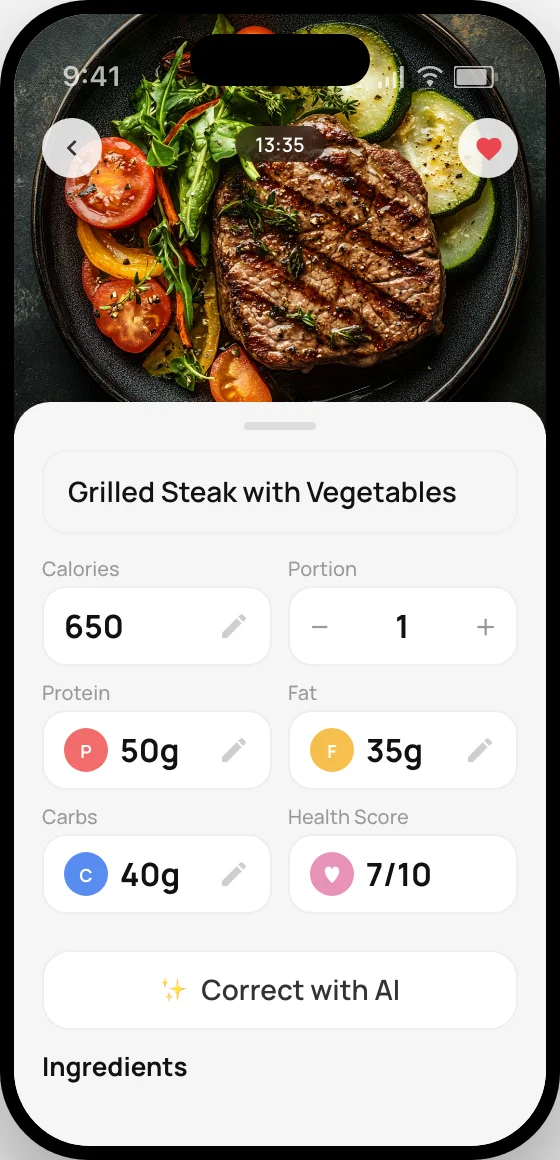
Snap a photo of your meal — CalZen AI instantly calculates calories, protein, carbs, and fat. No manual entry needed.