Butter is pure dairy fat elevated to an art form — at 717 kcal per 100 g with 81.1 g of fat, 0.9 g of protein, and virtually zero carbohydrates (0.1 g), it is the most calorie-dense whole food in most kitchens. What those numbers do not capture is the extraordinary culinary power packed into every golden gram: butter creates flaky croissant layers, velvety sauces, crisp-bottomed pancakes, and the nutty depth of beurre noisette. It has been a cornerstone of French, Northern European, and Indian (as ghee) cooking for thousands of years.
Vitamin A is the standout at 684 mcg RAE per 100 g — 76% of the Daily Value — making butter one of the richest natural sources of preformed retinol. Vitamin A supports night vision by forming rhodopsin in the retina, maintains epithelial cell integrity, and plays a direct role in immune function. Vitamin K (7 mcg) is present as both K1 and K2 (the latter produced by bacterial fermentation in cultured butters), directing calcium deposition into bones rather than arterial walls. Vitamin E (2.32 mg, 15% DV) provides fat-soluble antioxidant protection, neutralizing lipid peroxyl radicals in cell membranes. Vitamin D (1.5 mcg, 10% DV) aids calcium absorption and immune modulation. Selenium (1 mcg) provides trace antioxidant support. Sodium is remarkably low in unsalted butter at 11 mg per 100 g. Cholesterol is significant at 215 mg, reflecting the concentrated nature of milkfat. Butter also contains small amounts of butyric acid — a short-chain fatty acid that nourishes colon cells and has been studied for its anti-inflammatory properties.
The golden rule of cooking with butter: know its smoke point. Regular butter burns at around 175 °C (350 °F) because of its milk solids, which char. Clarified butter (or ghee) handles temperatures up to 250 °C (480 °F), making it better for searing. For beurre noisette (brown butter), melt butter over medium heat, swirling constantly, until the milk solids turn a deep amber and the kitchen fills with a nutty aroma — about 5 minutes. Immediately pour into a cool bowl to stop the cooking. Brown butter transforms pasta, fish, vegetables, and even cookies. For baking, butter temperature is critical: cold butter creates flaky pastry (as in pie crust and croissants), room-temperature butter creams with sugar for cakes and cookies, and melted butter produces dense, fudgy textures in brownies. Store butter wrapped in its original packaging in the refrigerator for up to a month, or freeze for up to six months. A small dish of butter can sit at room temperature for a day or two if your kitchen stays below 21 °C (70 °F).
| Nutrient | Per 100 g | Per serving |
|---|---|---|
| Calories | 717 kcal | 100 kcal |
| Protein | 0.9 g | 0.1 g |
| Fat | 81.1 g | 11.4 g |
| Carbohydrates | 0.1 g | 0.0 g |
| Fiber | 0 g | 0.0 g |
| Sugar | 0.1 g | 0.0 g |
| Water | 17.9 g | 2.5 g |
| Vitamins & Minerals | ||
| Vitamin A | 0.684 mg | 76% |
| Vitamin D | 1.5 µg | 8% |
| Vitamin E | 2.32 mg | 15% |
| Vitamin K | 7 µg | 6% |
| Sodium | 11 mg | 0% |
| Cholesterol | 215 mg | 72% |
| Selenium | 1 µg | 2% |
| Serving | Calories | Protein | Fat | Carbohydrates |
|---|---|---|---|---|
| 100 g | 717 kcal | 0.9 g | 81.1 g | 0.1 g |
| 1 tbsp (14 g) | 100 kcal | 0.1 g | 11.4 g | 0.0 g |
| 1 pat (5 g) | 36 kcal | 0.0 g | 4.1 g | 0.0 g |
| Food | Calories | Protein | Fat | Carbohydrates |
|---|---|---|---|---|
| Butter | 717 kcal | 0.9 g | 81.1 g | 0.1 g |
| Greek Yogurt | 59 kcal | 10.2 g | 0.7 g | 3.6 g |
| Milk (whole) | 61 kcal | 3.2 g | 3.3 g | 4.8 g |
| Kefir | 63 kcal | 3.3 g | 3.5 g | 4.7 g |
| Cottage Cheese | 98 kcal | 11.1 g | 4.3 g | 3.4 g |
Use our calorie calculator to find your daily calorie needs.
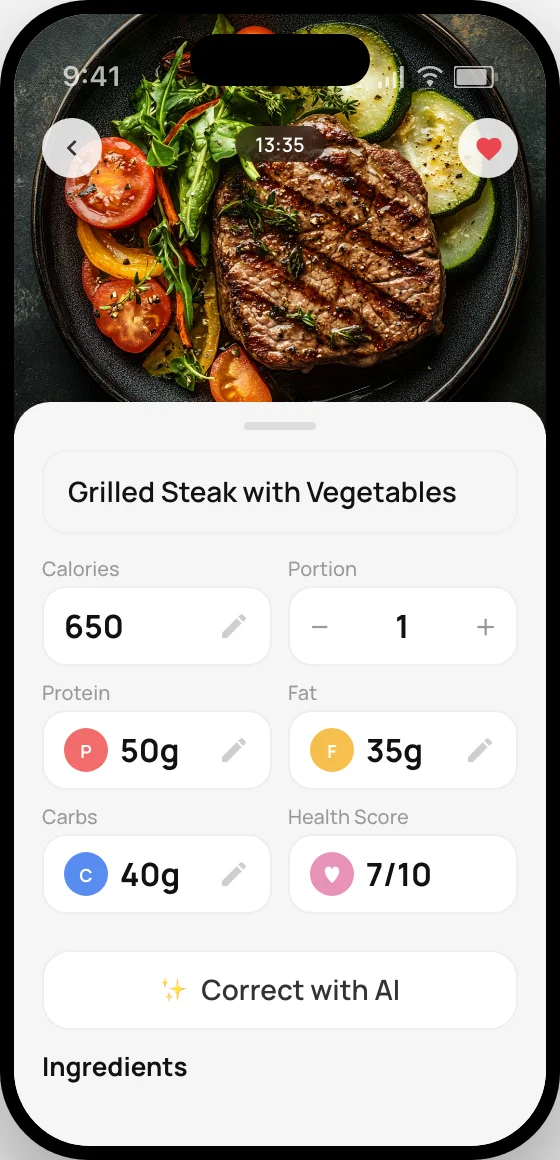
Snap a photo of your meal — CalZen AI instantly calculates calories, protein, carbs, and fat. No manual entry needed.