Pizza is arguably the most universally beloved food on Earth — a dish that originated as a humble Neapolitan street food and now generates over $150 billion in annual revenue in the United States alone. A standard cheese pizza slice delivers 266 kcal per 100 g with 11.4 g of protein, 10.4 g of fat, 33 g of carbohydrates, and 2.3 g of fiber. The magic lies in the Maillard reaction: high oven temperatures caramelize the sugars in the dough, brown the cheese proteins, and concentrate the tomato sauce, creating flavor complexity that few single dishes can match. With 42.4 g of water, pizza maintains a satisfying chew that keeps you reaching for the next slice before the last one is finished.
Sodium is pizza's most prominent micronutrient at 640 mg per 100 g — about 28% of the daily upper limit — coming from the cheese, sauce, and dough. Calcium (180 mg, 18% DV) from the mozzarella supports bone density. Iron (2.5 mg, 14% DV) from the enriched flour aids oxygen transport. Phosphorus (155 mg, 22% DV) contributes to bone and tooth structure. Selenium (15 mcg, 27% DV) from the wheat flour activates antioxidant enzymes. Niacin (2.8 mg, 18% DV) drives energy metabolism. Potassium (130 mg) from the tomato sauce supports cardiovascular function. Mozzarella also contributes vitamin A, B12, and riboflavin not shown in the headline data. The tomato sauce provides lycopene — a carotenoid antioxidant that becomes more bioavailable when cooked, making pizza sauce one of the better dietary sources of this compound.
Home pizza starts with the dough: combine 500 g bread flour, 325 ml water (65% hydration), 10 g salt, 3 g instant yeast, and 15 ml olive oil. Knead for 8 minutes, cold-ferment in the refrigerator for 24-72 hours — this long, slow rise develops complex flavor no same-day dough can match. The oven should be as hot as possible: 250°C (480°F) minimum, ideally with a pizza stone preheated for 45 minutes. Stretch the dough by hand (never a rolling pin, which crushes the air bubbles), apply sauce sparingly, and use low-moisture mozzarella torn into pieces. Less is more with toppings — overloading creates a soggy center. Bake for 8-12 minutes until the crust is spotted with charred bubbles and the cheese is molten with golden spots. Let it rest on a wire rack for 2 minutes so the cheese sets before slicing.
| Nutrient | Per 100 g | Per serving |
|---|---|---|
| Calories | 266 kcal | 285 kcal |
| Protein | 11.4 g | 12.2 g |
| Fat | 10.4 g | 11.1 g |
| Carbohydrates | 33 g | 35.3 g |
| Fiber | 2.3 g | 2.5 g |
| Sugar | 3.6 g | 3.9 g |
| Water | 42.4 g | 45.4 g |
| Vitamins & Minerals | ||
| Sodium | 640 mg | 28% |
| Calcium | 180 mg | 14% |
| Iron | 2.5 mg | 14% |
| Phosphorus | 155 mg | 12% |
| Potassium | 130 mg | 3% |
| Selenium | 15 µg | 27% |
| Niacin (B3) | 2.8 mg | 18% |
| Serving | Calories | Protein | Fat | Carbohydrates |
|---|---|---|---|---|
| 100 g | 266 kcal | 11.4 g | 10.4 g | 33 g |
| 1 slice (107 g) | 285 kcal | 12.2 g | 11.1 g | 35.3 g |
| Small whole (340 g) | 904 kcal | 38.8 g | 35.4 g | 112.2 g |
| Food | Calories | Protein | Fat | Carbohydrates |
|---|---|---|---|---|
| Pizza (cheese) | 266 kcal | 11.4 g | 10.4 g | 33 g |
| Oat Milk | 43 kcal | 0.4 g | 1.4 g | 7 g |
| Sushi (California roll) | 143 kcal | 5.8 g | 2 g | 26.1 g |
| Hummus | 166 kcal | 7.9 g | 9.6 g | 14.3 g |
| Hamburger | 295 kcal | 17 g | 14 g | 24 g |
Use our calorie calculator to find your daily calorie needs.
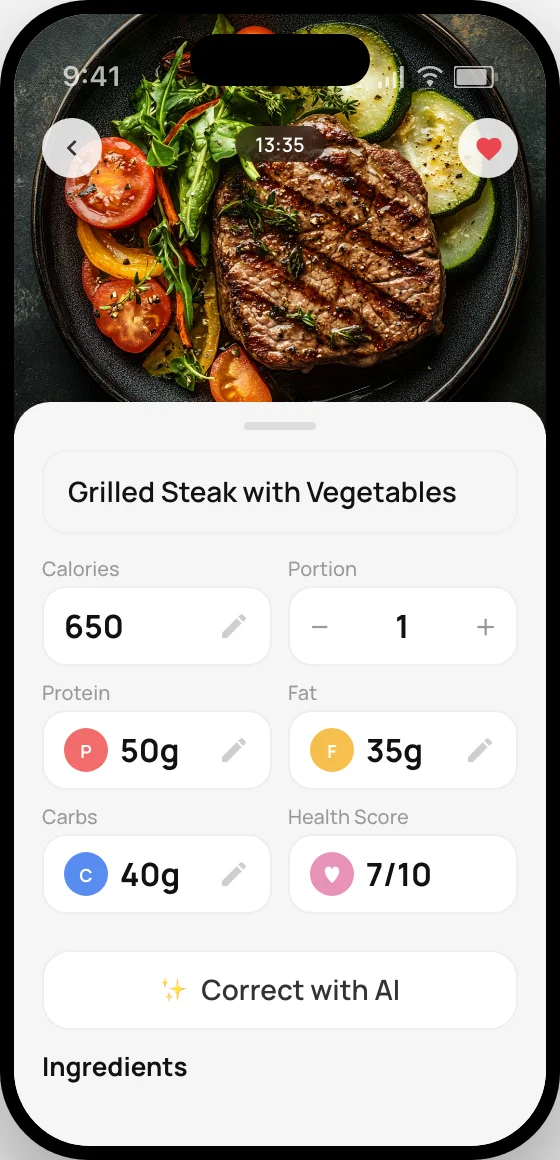
Snap a photo of your meal — CalZen AI instantly calculates calories, protein, carbs, and fat. No manual entry needed.