Calculate your Total Daily Energy Expenditure — the number of calories your body burns every day, based on the Mifflin-St Jeor equation.
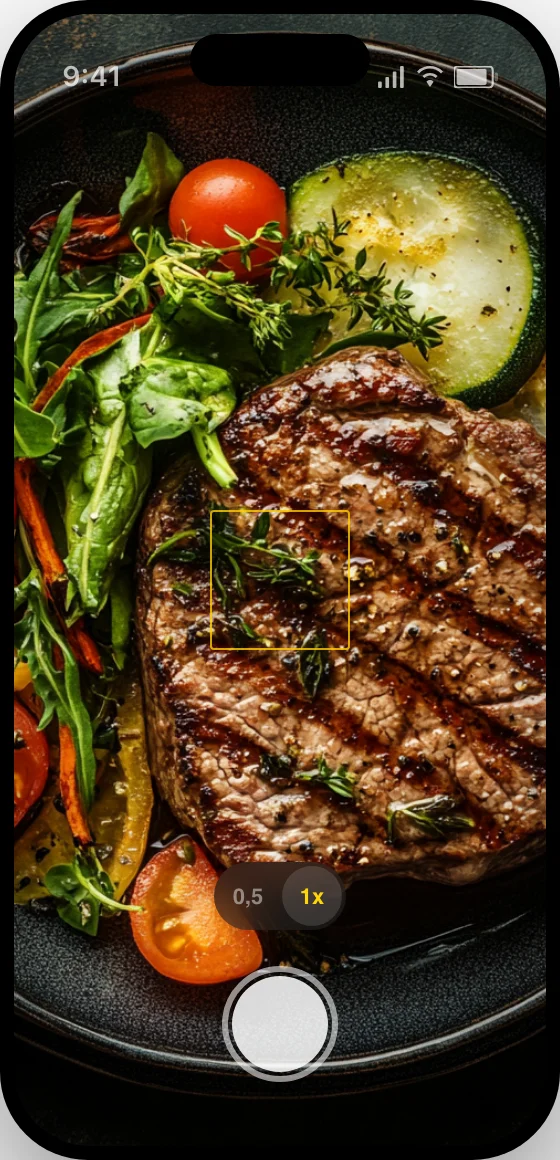
Now that you know your TDEE — track it effortlessly. Snap a photo of your food — CalZen AI counts calories, macros, and more.


TDEE (Total Daily Energy Expenditure) is the total number of calories your body burns in a 24-hour period. It includes everything from breathing and digesting food to walking and exercising.
Knowing your TDEE is the foundation of any diet plan: eat less than your TDEE to lose weight, eat more to gain weight, or match it to maintain your current weight. Unlike BMR, TDEE accounts for your real-world activity level.
The largest component of your TDEE. BMR is the energy your body needs just to stay alive — powering your brain, heart, lungs, and other organs. Even if you stayed in bed all day, you'd still burn this many calories.
The energy required to digest, absorb, and process the food you eat. Protein has the highest thermic effect (20-30%), followed by carbs (5-10%) and fat (0-3%). This is why high-protein diets can slightly boost your metabolism.
This includes both intentional exercise (EAT — Exercise Activity Thermogenesis) and non-exercise activity (NEAT — walking, fidgeting, standing). NEAT can vary by up to 2,000 calories/day between individuals and is often the most modifiable component.
This calculator uses the Mifflin-St Jeor equation (1990) to estimate your Basal Metabolic Rate (BMR) — the calories your body needs at complete rest. It then multiplies your BMR by an activity factor to calculate your TDEE.
The Mifflin-St Jeor equation was found to be the most accurate predictive equation for healthy individuals in a systematic review of 18 studies by Frankenfield et al., published in the Journal of the American Dietetic Association (2005). It predicts resting metabolic rate within 10% of measured values in more subjects than any other equation.
| Formula | Equation | Accuracy |
|---|---|---|
| Mifflin-St Jeor (default) | 10×W + 6.25×H - 5×A ± s | Most accurate (ADA) |
| Harris-Benedict (revised) | 13.4×W + 4.8×H - 5.7×A + 88.4 (M) | Tends to overestimate |
| Katch-McArdle | 370 + 21.6×LBM | Best for athletes (needs body fat %) |
| Level | Description | Multiplier |
|---|---|---|
| Sedentary | Little or no exercise, desk job | ×1.2 |
| Lightly Active | Light exercise 1-3 days/week | ×1.375 |
| Moderately Active | Moderate exercise 3-5 days/week | ×1.55 |
| Very Active | Hard exercise 6-7 days/week | ×1.725 |
| Extra Active | Very intense exercise, physical job | ×1.9 |
This calculator supports three scientifically validated formulas for estimating your Basal Metabolic Rate (BMR). Each has different strengths and is better suited for different body types.
Developed in 1990 by Mifflin and St Jeor, this is the most widely recommended equation. A 2005 systematic review by Frankenfield et al. in the Journal of the American Dietetic Association found it to be the most accurate for healthy adults, predicting BMR within ±10% in more subjects than any other formula.
Best for: Most healthy adults. This is the default formula used by dietitians and nutrition professionals worldwide.
Originally developed in 1919 by Harris and Benedict, this was the gold standard for decades. The 1984 revision by Roza and Shizgal improved accuracy, but studies show it still tends to overestimate BMR by 5-15%, especially in obese individuals.
Best for: Historical comparison. If you've been tracking with Harris-Benedict, you may want to continue for consistency, but know it likely overestimates your BMR.
Unlike the other formulas, Katch-McArdle uses lean body mass (LBM) instead of total weight, making it gender-neutral. This makes it particularly accurate for athletes and people who know their body fat percentage.
Best for: Athletes, bodybuilders, and anyone who knows their body fat percentage. If you have above-average muscle mass, this formula will be more accurate than Mifflin-St Jeor.
All three formulas estimate BMR only — the calories your body burns at rest. To get your TDEE, the calculator multiplies your BMR by an activity factor. The activity multiplier is the same regardless of which BMR formula you choose.
Many people confuse TDEE and BMR. Here's the key difference:
| BMR | TDEE | |
|---|---|---|
| Measures | Calories at complete rest | Total daily calories burned |
| Includes activity? | No | Yes |
| Use for dieting? | No — too low for planning | Yes — base your diet on this |
| Typical value | 1,400–1,800 kcal | 1,800–3,000 kcal |
Bottom line: Always use TDEE (not BMR) to plan your calorie intake. Eating at your BMR would mean a severe calorie deficit that's unsustainable and potentially unhealthy.
Research consistently shows that people who track what they eat are significantly more successful at losing weight:
| Study | Finding | Source |
|---|---|---|
| Kaiser Permanente (2008) | People who kept daily food records lost 2× more weight | Am J Prev Med |
| Harvey et al. (2019) | Only 15 min/day of food logging needed for results | Obesity |
| Berry et al. (2021) | Digital self-monitoring = -2.87 kg significant weight loss | Obesity Reviews |
| Huntriss et al. (2024) | 50% of active users achieved 5%+ weight loss | Obesity Sci & Pract |
| AI-Assisted Tracking (2024) | 64% maintain changes vs 23% manual tracking | JMIR |
"Those who kept daily food records lost twice as much weight as those who kept no records."
— Jack Hollis, Ph.D., Kaiser Permanente
1. Mifflin MD, St Jeor ST, et al. Am J Clin Nutr. 1990;51(2):241-7. PubMed →
2. Roza AM, Shizgal HM. Am J Clin Nutr. 1984;40(1):168-182. PubMed →
3. Frankenfield D, et al. J Am Diet Assoc. 2005;105(5):775-789. PubMed →
4. FAO/WHO/UNU. Human Energy Requirements. Rome, 2004. FAO →
5. Harvey J, et al. Obesity. 2019;27(3):380-384. PubMed →
6. Levine JA. Non-exercise activity thermogenesis (NEAT). Best Pract Res Clin Endocrinol Metab. 2002;16(4):679-702. PubMed →
7. Westerterp KR. Diet induced thermogenesis. Nutr Metab. 2004;1(1):5. PubMed →
Stop guessing calories. Snap a photo — CalZen AI counts everything for you. Calories, protein, carbs, fat — in seconds.